kate pringle and L. Lamar Wilson were generous enough to tag me in there Next Big Thing responses and since I do have a book coming out, I thought I would jump on. How do you know a meme is dead? It finally gets to me.
What is the working title of the book? Boyishly. Not just the working title but the actual title, about to be birthed by YesYesBooks in May 2013. Did I steal it from Carol Mavor's Reading Boyishly? Little bit. Let's say adopted.
Where did the idea come from for the book? This is my first book, so it wasn't a book I sat down to write. Instead, I just wrote poems. Eventually, I started to feel like I had the number of poems that belonged in a book. So I tried to make them into a book. And I kept writing poems. Then I started to figure out that these poems had some things in common. So I put those poems together. And that's when I had the idea that I really had a book. Having worked backwards for the first book, let me say that working forward (exploring an idea in poems) is a lot easier.
What genre does your book fall under? Poetry. Other than that, I think poets spend way too much time trying to figure out what "kind" of poetry they write. Even worse, they spend more time trying to figure out which "kind" of poetry is poetic enough. Who is my book's poetic family? CA Conrad. Dorothea Lasky. Susan Howe. Claudia Rankine. And we all live together in a house way up high in a tree.
What actors would you choose to play the part of your characters in a movie rendition? Who wrote this meme, James Franco? Characters present are John Brown, Andre the Giant, Gertrude Stein, Samuel Beckett, Muhammad Ali, Chang and Eng, and a Chinese vampire. Plus a young girl and adolescent girls and women. But I want Quvenzhane Wallis to read the audio book. And then I want her to spit out James Franco's bones at the end.
What is the one-sentence synopsis of your book? All the things of the world that slip around unseen, that get labelled monsterous, talk back.
How long did it take you to write the first draft of the manuscript? I wrote poems for probably 10 years. Once I knew what the book was, I worked, wrote and reordered for about 3 years.
Who or what inspired you to write this book? I wrote some as an undergraduate, but not well. When I became a grad student, I focused on becoming a better academic writer. I wanted to take some MFA classes when I was at UNCG but they wouldn't allow it. (MFA students took PhD classes, but it didn't work the other way around.) My first job out of grad school I taught creative writing and did the exercises with my students. Then I started going to open mikes and reading and discovered a deep need to write poems. Hasn't gone away yet.
What else about your book might pique the readers' interest? The cover is likely to come from a photographer, Eleanor Bennett, who is a 16 year old wunderkind from England. Her work is amazing and I'm thrilled to be working with her to find an image for the cover of Boyishly. http://eleanorleonnebennett.zenfolio.com/
Will your book be self-published or represented by an agency? No agency and not self-published. Boyishly will be published by YesYes Books in Portland OR.
Tuesday, March 5, 2013

Monday, June 4, 2012
What I'm Doing- Asking Elvis
I currently have two shrines at my house, one to Elvis, one to Gertrude Stein and Alice Toklas. I use these shrines to show respect, to generate particular kinds of energy/mojo, and to help me think. Do Elvis or Gertrude really channel through my shrines? I think they do and I love having them both. (The next shrine I'm going to build is going to be for Thoreau and it's going to be a Three Sisters garden (corn, beans, squash) like Thoreau built for the newlyweds Nathaniel and Sophia Hawthorne when they moved into the Old Manse in Concord.
Today I lit the Elvis shrine and asked for release from Loserville. (Loserville is the handy term I use when I get on a string of poetic rejections. It can include other rejections as well but the poetic ones are usually the trigger.) Elvis told me "Loserville will let you go when it's done with you darlin'. Until then, keep taking care of business."
Thanks Elvis. I always find comfort in your advice.

Today I lit the Elvis shrine and asked for release from Loserville. (Loserville is the handy term I use when I get on a string of poetic rejections. It can include other rejections as well but the poetic ones are usually the trigger.) Elvis told me "Loserville will let you go when it's done with you darlin'. Until then, keep taking care of business."
Thanks Elvis. I always find comfort in your advice.

Friday, June 1, 2012
What I'm Reading-Alcohol and Poetry
I read for the first time Lewis Hyde's excellent Alcohol and Poetry: John Berryman and the Booze Talking and loved it for several reasons.
First, I like it as a piece of criticism. I wonder why this sort of plain-talk assessment has fallen out of favor, tumbled into the venue of comical literary columnists, instead of entrenching itself in academia. Its voice is smart and strong without being over the top and elusive. It isn't afraid to make statements (even if I don't love all the statements it makes. The leaking of drunken psychology into poems doesn't always convince me) and it isn't afraid to make big statements. Hyde makes statements about his understanding of alcoholism (don't buy all of those either)- that therapy can't cure it, that AA is the best way, that there is a spiritual component to recovery- and moves from them. I even enjoy that he's willing to identify and use an author to understand Berryman's work. There's some truth to what he says about who Berryman is and what it does to his writing that acknowledges that a real, flawed human being sat down and hashed out those poems in a place and time. Brave. His talk about "spirit-helpers" and the pull to stay with them as a guide instead of forge your own path is as insightful as it may be inaccurate.
Second, I like its voice. As I noted above, Hyde says things. he doesn't equivocate or apologize or hand it off to someone else. And he does it responsibly, unlike talk radio shows, about the only place you hear people put forth explicit world views and statements any more. Talk radio though makes statements to entertain, to amuse, to infuriate. Hyde makes statements to explain and elucidate. I can disagree and read on, momentarily step into the world he builds, even if I know I plan to step out later. Hyde doesn't yell or try to move eyeballs to his blog. He simply states what he understands- jump on and you know you can still jump off at the end, at least having witnessed the scenery. "A good spirit does not just change you, it is an agent of growth."
Third, I like that it takes poetry seriously. Poetry was Berryman's work to do and he didn't do it- he chose the drink instead. That matters to Hyde- something real was lost, never created, or created askew because Berryman drank and kept on drinking. Even though Hyde begins with the generic link between literature and drinking, it's apparent that it isn't inevitable. No matter what those folks told themselves, they didn't have to get drunk to get to the place where they could write. In fact, getting drunk to get to that place meant they couldn't really come back at least not with everything they could have sober. It is both sad and infuriating that we buy this connection and while not explicit about it, Hyde argues that literature has lost, we have lost because of the decisions these authors made. "An anaesthetic is a poet-killer."
Strangely, it made me want to read both Recovery and The Dream Songs. The first bit of Recovery was infuriating and sloppy but I do want to finish the rest. It's refreshing though to see a smart piece of criticism that makes a real argument that is respectful of poetry's power. We need to demand this attitude from media and culture, as well as write poems that deserve the public's attention.
First, I like it as a piece of criticism. I wonder why this sort of plain-talk assessment has fallen out of favor, tumbled into the venue of comical literary columnists, instead of entrenching itself in academia. Its voice is smart and strong without being over the top and elusive. It isn't afraid to make statements (even if I don't love all the statements it makes. The leaking of drunken psychology into poems doesn't always convince me) and it isn't afraid to make big statements. Hyde makes statements about his understanding of alcoholism (don't buy all of those either)- that therapy can't cure it, that AA is the best way, that there is a spiritual component to recovery- and moves from them. I even enjoy that he's willing to identify and use an author to understand Berryman's work. There's some truth to what he says about who Berryman is and what it does to his writing that acknowledges that a real, flawed human being sat down and hashed out those poems in a place and time. Brave. His talk about "spirit-helpers" and the pull to stay with them as a guide instead of forge your own path is as insightful as it may be inaccurate.
Second, I like its voice. As I noted above, Hyde says things. he doesn't equivocate or apologize or hand it off to someone else. And he does it responsibly, unlike talk radio shows, about the only place you hear people put forth explicit world views and statements any more. Talk radio though makes statements to entertain, to amuse, to infuriate. Hyde makes statements to explain and elucidate. I can disagree and read on, momentarily step into the world he builds, even if I know I plan to step out later. Hyde doesn't yell or try to move eyeballs to his blog. He simply states what he understands- jump on and you know you can still jump off at the end, at least having witnessed the scenery. "A good spirit does not just change you, it is an agent of growth."
Third, I like that it takes poetry seriously. Poetry was Berryman's work to do and he didn't do it- he chose the drink instead. That matters to Hyde- something real was lost, never created, or created askew because Berryman drank and kept on drinking. Even though Hyde begins with the generic link between literature and drinking, it's apparent that it isn't inevitable. No matter what those folks told themselves, they didn't have to get drunk to get to the place where they could write. In fact, getting drunk to get to that place meant they couldn't really come back at least not with everything they could have sober. It is both sad and infuriating that we buy this connection and while not explicit about it, Hyde argues that literature has lost, we have lost because of the decisions these authors made. "An anaesthetic is a poet-killer."
Strangely, it made me want to read both Recovery and The Dream Songs. The first bit of Recovery was infuriating and sloppy but I do want to finish the rest. It's refreshing though to see a smart piece of criticism that makes a real argument that is respectful of poetry's power. We need to demand this attitude from media and culture, as well as write poems that deserve the public's attention.
Thursday, May 24, 2012
What I'm Fretting About- Grow It On Up, Boys
The point of this blog is to keep a list of things that I am reading, hearing, watching, seeing, thinking about while I am working on a new manuscript. Mostly I want to be able to go back and see how ideas sprouted and grew throughout the process and you're welcome to peek in as well if you like. I've been keeping a short list to catch up on during the end of the semester, so they'll be more this week.
But this entry is about what's driving me crazy right now, what I feel particularly sensitive to, what I'm noticing to my irritation. And it comes in two separate but related stages.
The first is men who dress like boys. I went to a reading the other night and both men, fully grown with university jobs, wives, children, partners, etc. had on some version of jeans, t-shirts, sneakers, headphones and other children's wear. Now, there's nothing really wrong with jeans and a t-shirt and the occasional pair of sneakers (although I still think those need to be reserved for the gym or other special events) and I have no more love for ties than I do for sneakers.
But what I'm really talking about is dressing like a little boy. Converse/Keds/hipster idiot sneakers. Vintage t-shirts (that the adult might have worn as a boy) of TV shows or bands or toys. Stupid filthy-looking jeans. Why this wears me out is directly related to the second part.
Both these guys read a series of works by other authors, many of which featured emotionally constipated men who ironically commented on everything from a great distance. There was not a real emotion to be found. (The one nice exception to this was a reading from Invisible Man. That's right- the man who could not be seen was the most emotionally present character of the evening.)
So I would like to officially announce I have had it right up to here with the emotionally absent male character- see my entry on Drive. Why have I reached this place? If men feel compelled to remain children who are incapable of recognizing or feeling their feelings, what is it to me? Obviously there are important ramifications for my life- I have a nephew, I have to live in a world primarily shaped by these men, and I truly believe everybody is typically happier when they are somehow aware of what they are feeling and have some healthy way to express that. I even feel bad that so many American men live in a world where that isn't possible for them. And these are all important effects.
But today's topic is how I hate the effect this attitude has on literature, particularly poetry. I think poetry requires bravery- a poet has to be able to dive into and swim around some messy, messy places and then come back and talk about it. That's the poetry I'm interested in writing and reading. And I don't think all poetry has to do that- ironic, comedic, distanced poetry has a place. But the problem now is it has all the space.
This I blame on MFA programs. Emotionally-retarded boy poetry has somehow become the standard that all poetry is supposed to be- it's chalkablock in lit mags. I'm not saying it should all go away but neither should it be the only kind of poetry that finds a home, is taught, wins prizes, and gets reviewed.
It's even worse because I think the lionization of this kind of poetry is also at the expense of women. Women particularly are mocked and degraded if they don't produce what I've come to think of as 12-year old boy poetry, although there is also that strange arm of whispery, nature poetry that's open to women.
So I've decided to put this at the feet of American men. Men need to start acting like grown men, grown men who feel their real feelings, express them in healthy, respectful ways, and allow others to do the same. That might start with what they wear. If you don't want to live as a boy, don't dress like a boy. Grow up, boys, and drag the world of poetry along with you.
But this entry is about what's driving me crazy right now, what I feel particularly sensitive to, what I'm noticing to my irritation. And it comes in two separate but related stages.
The first is men who dress like boys. I went to a reading the other night and both men, fully grown with university jobs, wives, children, partners, etc. had on some version of jeans, t-shirts, sneakers, headphones and other children's wear. Now, there's nothing really wrong with jeans and a t-shirt and the occasional pair of sneakers (although I still think those need to be reserved for the gym or other special events) and I have no more love for ties than I do for sneakers.
But what I'm really talking about is dressing like a little boy. Converse/Keds/hipster idiot sneakers. Vintage t-shirts (that the adult might have worn as a boy) of TV shows or bands or toys. Stupid filthy-looking jeans. Why this wears me out is directly related to the second part.
Both these guys read a series of works by other authors, many of which featured emotionally constipated men who ironically commented on everything from a great distance. There was not a real emotion to be found. (The one nice exception to this was a reading from Invisible Man. That's right- the man who could not be seen was the most emotionally present character of the evening.)
So I would like to officially announce I have had it right up to here with the emotionally absent male character- see my entry on Drive. Why have I reached this place? If men feel compelled to remain children who are incapable of recognizing or feeling their feelings, what is it to me? Obviously there are important ramifications for my life- I have a nephew, I have to live in a world primarily shaped by these men, and I truly believe everybody is typically happier when they are somehow aware of what they are feeling and have some healthy way to express that. I even feel bad that so many American men live in a world where that isn't possible for them. And these are all important effects.
But today's topic is how I hate the effect this attitude has on literature, particularly poetry. I think poetry requires bravery- a poet has to be able to dive into and swim around some messy, messy places and then come back and talk about it. That's the poetry I'm interested in writing and reading. And I don't think all poetry has to do that- ironic, comedic, distanced poetry has a place. But the problem now is it has all the space.
This I blame on MFA programs. Emotionally-retarded boy poetry has somehow become the standard that all poetry is supposed to be- it's chalkablock in lit mags. I'm not saying it should all go away but neither should it be the only kind of poetry that finds a home, is taught, wins prizes, and gets reviewed.
It's even worse because I think the lionization of this kind of poetry is also at the expense of women. Women particularly are mocked and degraded if they don't produce what I've come to think of as 12-year old boy poetry, although there is also that strange arm of whispery, nature poetry that's open to women.
So I've decided to put this at the feet of American men. Men need to start acting like grown men, grown men who feel their real feelings, express them in healthy, respectful ways, and allow others to do the same. That might start with what they wear. If you don't want to live as a boy, don't dress like a boy. Grow up, boys, and drag the world of poetry along with you.
Monday, April 16, 2012
What I'm Watching: The Sound of Insects
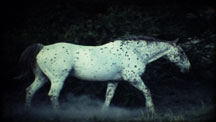
I watched this film on streaming Netflix the other day and found it really beautiful. The Sound of Insects is a movie based on a Japanese novel; in turn, that novel is based on a diary of a man who starved himself to death.
The movie is a slow series of images, some atmospheric music, and a narrator reading passages from the diary. The voice alternates between detached, analytical of what it is to starve to death (it doesn't go the way he thought he would) and ruminating and poetic- what it means to live/die, the existance of god, how much a self needs a body.
I found it all beautiful and intense. It left me thinking about a variety of extreme situations- Diana Nyad swimming to Cuba, Tibetan monks immolating themselves in squares, explorers who died trapped by ice. I've just finished putting another round of edits and adjustments on Boyishly (currently called Monstrum but we'll leave Boyishly as the title here right now) and have been wondering what I would write next. I love the idea of starting with these kinds of situations and seeing where that takes me.
The Village Voice called this film the anti-127 Hours and I see their point- calm and muted where Boyle's film is speed and flash. I found Sound of Insects meditative and watchable, a great find off the instant list.
Wednesday, February 15, 2012
What I'm Researching- Feral Children
Researching is my favorite part of writing. It doesn't feel the best (like the actual writing or giving a reading does) but it's the most fun, least painful part of the process. Right now I'm reading about feral children. I'm currently working through Feral Children and Clever Animals by Douglas Keith Candland. It's much more philosophical/psychological than I care to be on the topoic but it is a nice summary of some feral children stories and some smart animal stories.
I also read The True Story of Kaspar Hauser by Catherine Lucy Wilhelmina Powlett Cleveland (Duchess of Cleveland). her father kept Hauser before he was killed and she attempts to clear the father's name. I love researching old, strange topics via Google Books- all these great, long lost tomes written in often, radically different times. I got interested in this topic by reading Bram Stoker's (yep, that one) Famous Imposters a collection of tales about people who pass, often as lost members of royal families. I love Stoker and love that he wrote this book. What is everyone in Dracula but an impostor- the fear is not being able to recognize an impostor and believing that s/he is really who he or she claims to be. Sane. Buying real estate. Sitting on a park bench. No one in Dracula is ever really doing what they claim to be doing and everyone is slightly frigthened they will be discovered. Secret loves, agendas, and stories crowd the narrative.
Anyway, feral children are now knocking on the door of Stay and I'm very excited about letting them in. Poking about in old stories, taking notes, and beginning to see what takes shape, what sticks together, what voice starts to emerge is a blast. I wish I could spend more time doing it. So far, I'm interested in the set-up of the children's identities- The (Animal) Boy/Girl of (Location) and am currently stuck on the idea of The Bear-Girl of Fermanagh, although it was actually a sheep-boy who lived in Ireland and the Bear-Girl was from somewhere in Germany.
I'm not sure who is going to have the voice in the poem. In this manuscript I'm interested in sort of glimpsing the folks with a sidelong glance. Chang/Eng get talked about by a sailor who brings them to the States and then by a woman who spots them at a fair. I'm not sure if the feral child will get that same treatment. I miss having the big voices of people direct like I did in Boyishly, but I'm liking this sideways version of the stories too.
I also read The True Story of Kaspar Hauser by Catherine Lucy Wilhelmina Powlett Cleveland (Duchess of Cleveland). her father kept Hauser before he was killed and she attempts to clear the father's name. I love researching old, strange topics via Google Books- all these great, long lost tomes written in often, radically different times. I got interested in this topic by reading Bram Stoker's (yep, that one) Famous Imposters a collection of tales about people who pass, often as lost members of royal families. I love Stoker and love that he wrote this book. What is everyone in Dracula but an impostor- the fear is not being able to recognize an impostor and believing that s/he is really who he or she claims to be. Sane. Buying real estate. Sitting on a park bench. No one in Dracula is ever really doing what they claim to be doing and everyone is slightly frigthened they will be discovered. Secret loves, agendas, and stories crowd the narrative.
Anyway, feral children are now knocking on the door of Stay and I'm very excited about letting them in. Poking about in old stories, taking notes, and beginning to see what takes shape, what sticks together, what voice starts to emerge is a blast. I wish I could spend more time doing it. So far, I'm interested in the set-up of the children's identities- The (Animal) Boy/Girl of (Location) and am currently stuck on the idea of The Bear-Girl of Fermanagh, although it was actually a sheep-boy who lived in Ireland and the Bear-Girl was from somewhere in Germany.
I'm not sure who is going to have the voice in the poem. In this manuscript I'm interested in sort of glimpsing the folks with a sidelong glance. Chang/Eng get talked about by a sailor who brings them to the States and then by a woman who spots them at a fair. I'm not sure if the feral child will get that same treatment. I miss having the big voices of people direct like I did in Boyishly, but I'm liking this sideways version of the stories too.
Wednesday, February 8, 2012
What I Watched- Drive
This is more of an entry about what I don't want to do. Last night I watched Drive. I would link you to the trailer here, but, honestly, it contains almost all of Gosling's dialogue in the whole movie, as well as any facial expression which is not the frozen mask he wears throughout. (In a nice touch he does wear a mask of someone else's face as part of the plot and it is, smartly, almost impossible to tell it's a mask. This was the most intelligent move in the whole film.)
Mostly though, it's just another film featuring a monosyllabic, emotionally retarded white boy who somehow manages to have a magnetic personality that everyone is attracted to. (He glances at Carey Mulligan in an elevator and she feels compelled to track him down.) I am officially over this character type because there is no other story there. I'm also afraid that it's a source of so much that is repellent about white boy masculinity- the frozeness, the fear of any sort of emotion, the muteness.
I'm currently attracted to works that are big and don't apologize for their emotional core or movement. (I did love Albert Brook's character in the Drive. The scene where he walks into the garage and says "I was so excited about having my name on a car" felt like the best scene in the whole movie. He felt and wasn't ashamed of feeling.) Those are the works I want to write. They feel something and won't apologize for their bigness.
Unrelated to my weariness of what was ultimately an uninteresting (but pretty) movie, was a dislike of its fonts. Is 1980's pink semi-handwriting making a comeback? Let's not.

Mostly though, it's just another film featuring a monosyllabic, emotionally retarded white boy who somehow manages to have a magnetic personality that everyone is attracted to. (He glances at Carey Mulligan in an elevator and she feels compelled to track him down.) I am officially over this character type because there is no other story there. I'm also afraid that it's a source of so much that is repellent about white boy masculinity- the frozeness, the fear of any sort of emotion, the muteness.
I'm currently attracted to works that are big and don't apologize for their emotional core or movement. (I did love Albert Brook's character in the Drive. The scene where he walks into the garage and says "I was so excited about having my name on a car" felt like the best scene in the whole movie. He felt and wasn't ashamed of feeling.) Those are the works I want to write. They feel something and won't apologize for their bigness.
Unrelated to my weariness of what was ultimately an uninteresting (but pretty) movie, was a dislike of its fonts. Is 1980's pink semi-handwriting making a comeback? Let's not.
Subscribe to:
Posts (Atom)